
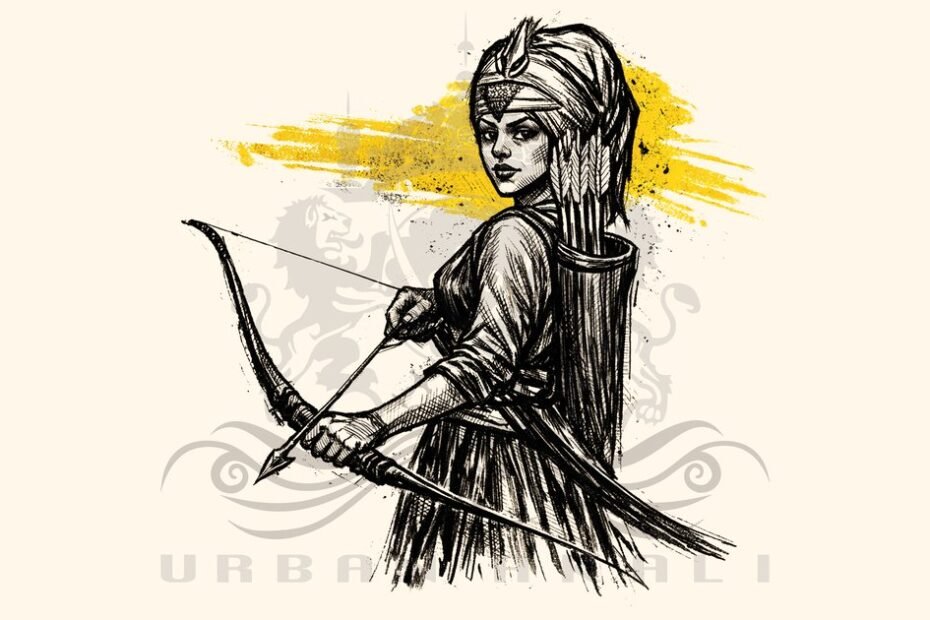
Sikh Heritage · Urban Akali
When people picture a Sikh warrior, they usually picture a man. But Sikh history has always had women at its centre: women who led men into battle, governed armies, defied empires and, in Britain, marched for the vote.
This isn’t a modern rewrite. From the very beginning, the Sikh Gurus taught that women and men stand as equals before the Creator. The women in this story didn’t borrow strength from anyone. They carried it already, and history gave them a moment to show it.
They told me to be small. To be quiet. To be careful.
Urban Akali
The women below were none of those things. Here is who they were, and why their story still matters to every Kaur today.
Chapter one
Equality from the first Guru
Sikh equality between women and men starts with Guru Nanak himself. In Asa di Var, he asks why anyone would call a woman inferior, when kings and leaders are born from her.
So kio manda aakhiai, jit jameh raajaan.
Why call her inferior, from whom kings are born?
Guru Nanak Dev Ji · Asa di Var, Guru Granth Sahib, Ang 473
The Gurus who followed put that teaching into practice:
- Guru Amar Das spoke out against sati, against the veil and against female infanticide, and appointed women to lead Sikh congregations in their regions.
- Guru Gobind Singh, at the founding of the Khalsa on Vaisakhi 1699, opened Amrit initiation to women and men alike.
- Kaur, the name given to Sikh women, is commonly understood to mean princess. No Sikh woman takes her identity from a father or husband. She carries her own name, as a sovereign.
So when Sikh women picked up the sword, they weren’t breaking the rules of their faith. They were living them.
Chapter two
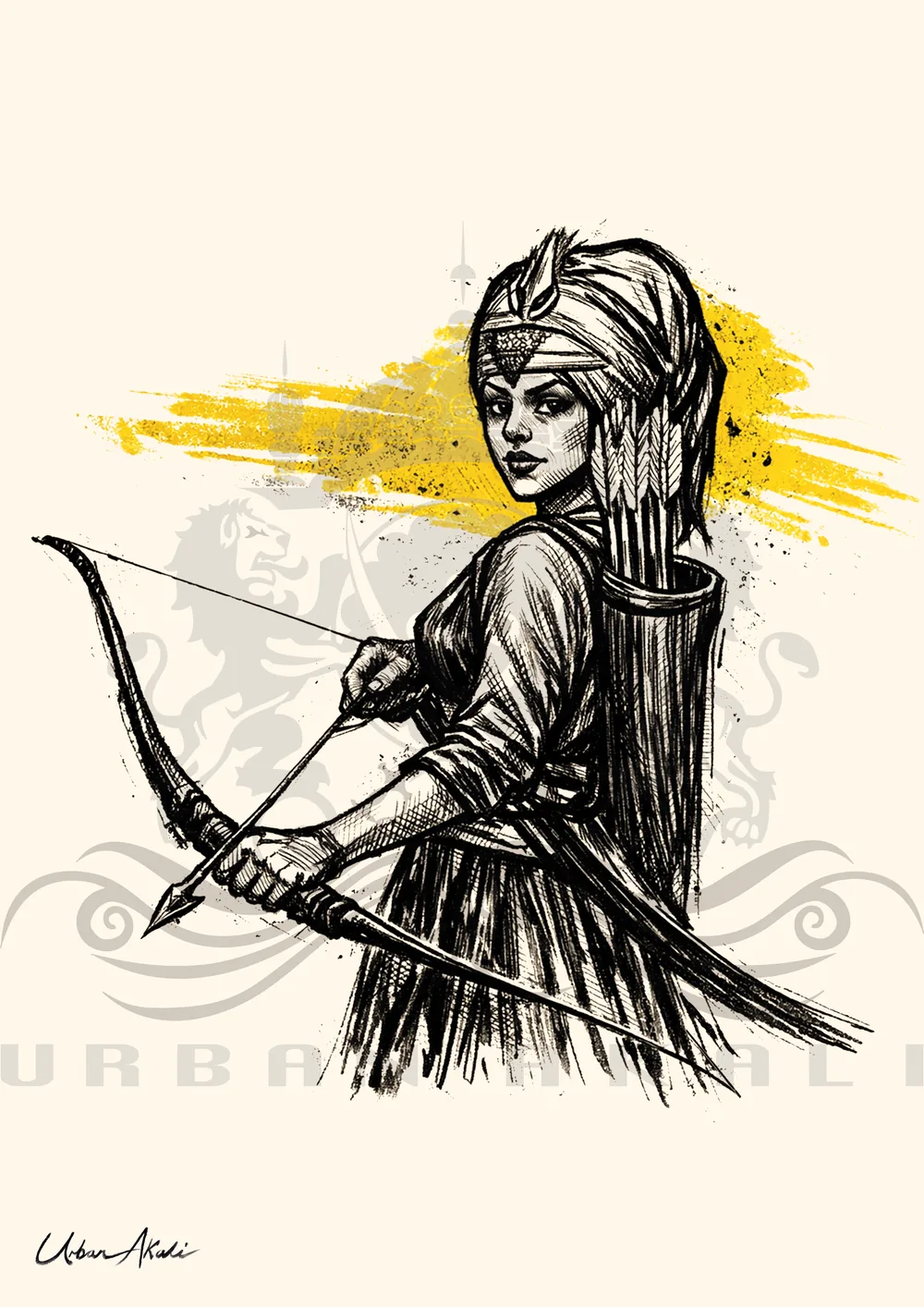
Mai Bhago and the Forty Liberated Ones
Mai Bhago, also known as Mata Bhag Kaur, led forty men back into battle at Khidrana in 1705, in what Sikhs remember as the Battle of Muktsar.
Born
Jhabal, near Amritsar
Battle
Khidrana (Muktsar), 1705
Remembered for
Leading the Chali Mukte
Later life
Janwada, near Bidar
She was born into a family with deep Sikh roots. Her father is said to have served in the army of Guru Hargobind.
The siege of Anandpur
By 1704, Mughal forces had besieged Guru Gobind Singh at Anandpur Sahib and cut off its food. Starving and worn down, a group of around forty Sikhs, led by Mahan Singh, told the Guru they were no longer his Sikhs, and went home.
The woman who sent them back
When Mai Bhago heard what they had done, she shamed them openly. Then she did something harder: she persuaded them to return, and she rode out with them to find the Guru and ask his forgiveness.
Khidrana, 1705
They caught up with the Guru near the water pool at Khidrana, just as a Mughal force closed in. Mai Bhago and the forty took their stand there and forced the attackers back. When the Guru reached the field afterwards, almost all of them were dead. Mahan Singh, dying, asked him to forgive the forty. The Guru blessed them as the Chali Mukte, the Forty Liberated Ones, and Khidrana has been called Sri Muktsar Sahib, the Pool of Liberation, ever since.
After the battle
Mai Bhago survived, badly wounded, and the Guru took her into his care. By tradition she then served among his personal bodyguards, dressed as a Nihang. After the Guru left this world at Nanded in 1708, she settled at Janwada, near Bidar in Karnataka, and spent the rest of her life teaching. Gurdwara Tap Asthan Mai Bhago stands there today.
Much of her life comes to us through tradition rather than written records, and dates differ between sources. What nobody disputes is the core of the story.
When others gave up, she led.
Chapter three
More women who shaped Sikh history
Mai Bhago is the best known, but she was far from alone.
1681 – 1747
Mata Sahib Kaur
Wife of Guru Gobind Singh, honoured as the Mother of the Khalsa. Every Sikh who takes Amrit is counted as her son or daughter. Many traditions credit her with adding sweetness to the first Amrit, though some sources give that role to Mata Jito.
Chamkaur · 1704
Bibi Sharan Kaur
After the Battle of Chamkaur, Sikh tradition remembers her slipping onto the battlefield at night to cremate the fallen Sikhs, including the Guru’s elder sons, before Mughal soldiers found and killed her.
c. 1762 – 1832
Rani Sada Kaur
Took command of the Kanhaiya Misl and its roughly 8,000 cavalry in 1789. She backed the young Ranjit Singh, who married her daughter, and stood beside him when he took Lahore in 1799, the first step towards the Sikh Empire.
c. 1817 – 1863
Maharani Jind Kaur
The last queen of the Sikh Empire, regent for her son Maharaja Duleep Singh. Imprisoned by the British and kept from her son for 13 years, she escaped Chunar Fort in disguise in 1849. She died in Kensington, London, in 1863.
That last name matters, because Jind Kaur’s story didn’t end in the Punjab. It continued here, in Britain.
Chapter four
A Sikh princess on the streets of London
Princess Sophia Duleep Singh (1876–1948), Jind Kaur’s granddaughter, fought for women’s right to vote in Britain.
She was the daughter of Maharaja Duleep Singh, the last Maharaja of the Punjab, and grew up in England as a goddaughter of Queen Victoria. From around 1896 she lived at Faraday House, Hampton Court, a grace-and-favour home given by the Crown. She could have lived quietly. She didn’t.
1909 — Active in the Women’s Social and Political Union, the suffragettes, in its Kingston upon Thames branch.
1910 — On “Black Friday”, 18 November, she marched on Parliament and was arrested. The charges were dropped.
1911 — With the Women’s Tax Resistance League, she refused to pay tax until women had the vote. One of her diamond rings was seized.
1913 — Photographed selling The Suffragette outside the gates of Hampton Court, the very palace that housed her.
2023 — English Heritage put a blue plaque on Faraday House. It names her simply: suffragette.
From Mai Bhago at Khidrana to Sophia outside Hampton Court, the line is unbroken: Sikh women standing up when it would have been easier to stay quiet.
Chapter five
Kaurs carrying the legacy today
The warrior spirit hasn’t gone anywhere. It just looks different now.
Gatka
Taught in gurdwaras and akharas across the UK, with girls and women training alongside boys and men. Not aggression: discipline, control and a clear mind.
Service
Sikh women serve in the British Armed Forces, the police and the NHS, carrying the Sant Sipahi ideal of the saint-soldier into everyday life.
Identity
Young Kaurs wearing a dastar, carrying their Sikh name with pride and telling their history through art, fashion, music and writing.
Wear the story
The warrior is not new. She has always been here.
Mai Bhago, Mata Sahib Kaur, Sada Kaur, Jind Kaur and Sophia Duleep Singh lived centuries and continents apart. What connects them is what the Gurus planted from the start: a Sikh woman’s strength belongs to her. Every Urban Akali piece is made to carry that history with quiet confidence.
The warrior was never outside. She was always within.
Questions
Frequently asked questions
Who was Mai Bhago?
Mai Bhago (Mata Bhag Kaur) was an 18th-century Sikh warrior from Jhabal, near Amritsar. In 1705 she led forty Sikhs who had deserted Guru Gobind Singh back into battle at Khidrana, now Sri Muktsar Sahib.
What does Kaur mean?
Kaur is the name Guru Gobind Singh gave Sikh women in 1699. It is commonly understood to mean princess, and it gives every Sikh woman an identity of her own rather than one taken from a father or husband.
Can Sikh women do gatka?
Yes. Gatka is open to everyone, and girls and women train in gurdwaras and akharas across the UK.
Who was the Sikh suffragette?
Princess Sophia Duleep Singh, daughter of Maharaja Duleep Singh. She campaigned for women’s votes in Britain and has an English Heritage blue plaque at Faraday House, Hampton Court.
Who is called the Mother of the Khalsa?
Mata Sahib Kaur, wife of Guru Gobind Singh.
Keep reading: Sikh Mala Beads: A Guide to Simran · Raising Little Khalsas: Sikh Kids’ Clothing with Meaning
Sources
Mai Bhago · Women in Sikhism · Mata Sahib Kaur · Sada Kaur · Jind Kaur (Wikipedia) · Sophia Duleep Singh blue plaque (English Heritage)